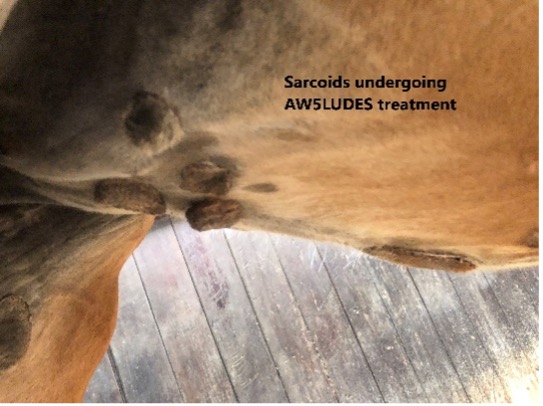
Sarcoids are the most common skin tumour in horses and often occur around an equine’s head, in the axilla and the groin area. They can also develop in wounds where they can be confused with ‘proud flesh’, which is also known as exuberant granulation tissue.
We commonly see horses with sarcoids in practice and our skilled equine vets are very experienced at identifying them and providing a treatment that is best suited each individual case. While sarcoid treatment is often an option, this is not always the case, and this can depend on a number of different factors.
In this article, we explain what sarcoids in horses are, the types of sarcoids, sarcoid treatments and what the implications are of buying a horse with sarcoids.
What Are Sarcoids In Horses?
Sarcoids (not to be confused with ‘sarcoidosis’) are tumours or cancer unique to the skin of horses. The distinctive lesions formed by sarcoids are often persistent, recurrent and invade neighbouring tissue, but they are not considered to spread/metastasise to other organs so benign and unpredictable are the words that are often thought of when thinking of this condition.
The Role Of Bovine Papillomavirus In Sarcoids
Bovine Papillomavirus is suspected to be involved in the disease process but unlike the lesions caused by Equine Papilloma Virus, sarcoids are not warts. Sarcoids affect young to middle aged horses most commonly and whilst it is suspected that there is a genetic predisposition, an evidence base has not been formed to support this yet. Flies have been suggested as a vector that spreads lesions to other areas in the same horse as lesions are more common around eyes and between fore and hind legs but again this has not been definitely proven.
Identification/Diagnosis Of Sarcoids In Horses
While a diagnosis of sarcoids is often presumptive based on the appearance of lesions, other tumours and inflammatory conditions exist that are identical in appearance. Some conditions may need ruling out such as Ringworm or dermatophytosis to give it it’s technical term. Making a definitive diagnosis of sarcoids therefore may require biopsy and histopathological examination but rapid intervention is recommended if biopsies are taken, as sarcoids do not like to be tampered with.
Types Of Sarcoids
In total there are six main types of sarcoid. However, it is important to note that many horses have a combination of different types. Each type of sarcoid behaves differently, with one of the key differences being how fast they grow and how aggressive they are.
The six main types of sarcoids are:
- Occult
- Verrucose
- Nodular
- Fibroblastic
- Malignant/Malevolent
- Mixed
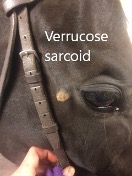
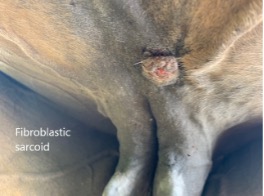
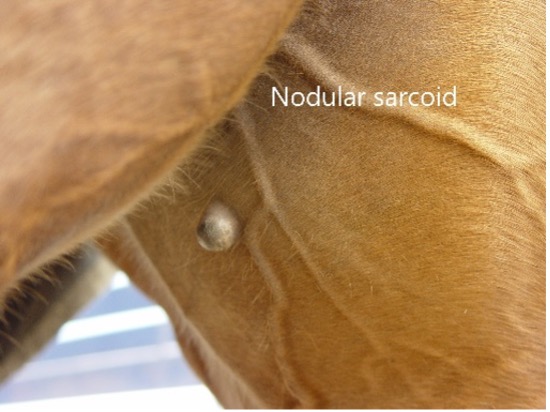
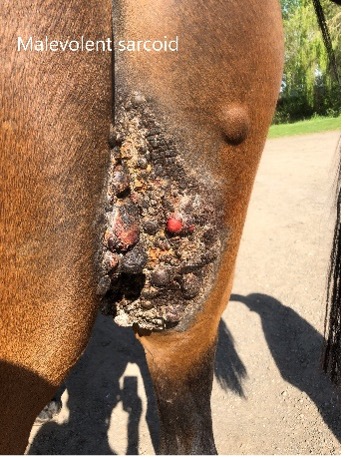
For more information about the different types of sarcoid in horses, please see our Sarcoid treatment options blog.
Sarcoid Treatments
While there is no single universal treatment for sarcoids, there are a number of different treatment options that can be used for equines. The different behaviour of sarcoids means that different treatments are appropriate for different circumstances.
Several factors are taken into consideration in determining the most appropriate treatment option including the location and extent of sarcoids and the individual temperament of each horse.
Both treatment and prognostication of sarcoid is notoriously difficult as they are so very unpredictable. Many non-veterinary and veterinary treatments are available, including the topical application of cytotoxic creams; wide surgical excision of the lesions with a laser is considered to offer the best chance for a cure.
Treatment Options For Equine Sarcoids
|
SURGICAL REMOVAL
|
COMMENTS
|
|---|
|
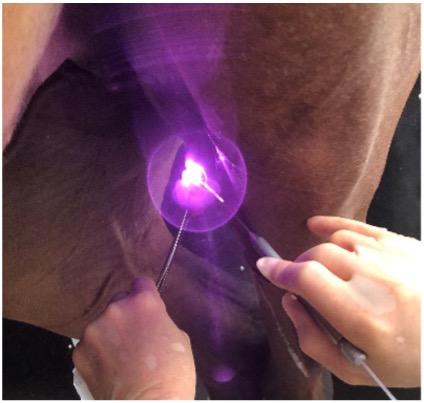
Laser surgery
|
Thermal dieback of surrounding tissue and tissue bed, very low recurrence rate
|
|
Simple excision
|
Very high risk of regrowth
|
|
Excision and cryotherapy
|
High risk of regrowth
|
|
Ligation (lamb ring/suture)
|
Appropriate for some nodular sarcoids
|
|
TOPICAL TREATMENTS
|
|
|---|
|
AW5LUDES
|
Liverpool cream, indiscriminate, leaves large void to heal
|
|
ACYCLOVIR (Zovirax™)
|
Varying success on very specific types and locations of sarcoids
|
|
5 Fluoro-uracil (Efudix™)
|
Varying success on very specific types and locations of sarcoids
|
|
Tazarotene (Zorac™)
|
Varying success on very specific types and locations of sarcoids
|
|
Imiquimod (Aldara™)
|
Varying success on very specific types and locations of sarcoids
|
|
INJECTABLE TREATMENTS
|
|
|---|
|
BCG
|
Varying success – lesion dependent
|
|
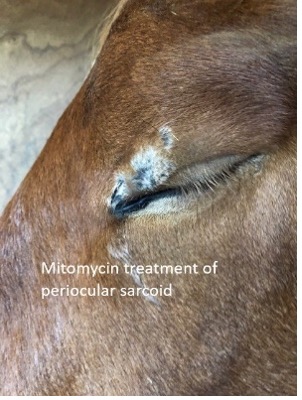
Mitomycin C
|
Useful in lesions close to the eye
|
|
Cisplatin
|
Varying success – lesion dependent
|
|
RADIATION THERAPY
|
|
|---|
|
Irridium Wires
|
Referral centres only
|
|
GOOGLE SEARCH
|
|
|---|
|
Autologous vaccine
|
Not recommended – the scientific evidence base/statistics doesn’t exist for any of these treatments and some potentially will in fact make the situation worse.
Some sarcoids will spontaneously resolve and any credit given to these treatments for this resolution causes potentially false faith in the treatment modality.
|
|
Toothpaste
|
|
Feed supplements
|
|
Tumeric
|
|
Bloodroot paste
|
|
Thuja cream
|
Treatment may not be an option in every case, not least where due to the location of lesions but also where wide excision is impossible or the application of toxic topical substances risks damaging sensitive neighbouring tissues.
Personal experience may influence attitude to treatment as may the experiences of the equine vet involved. The key to successful treatment of sarcoid in every case is the early identification of disease and early decision for treatment before the lesions advance to a stage where they become inoperable or untreatable.
Buying A Horse With Sarcoids
Buying a horse with pre-existing sarcoids can be a very contentious subject. It should be discussed at length with your equine vet. It is important to remember that a pre-purchase examination (vetting) is weighing up the risk/suitability of using a horse for an individual purchaser’s ‘shopping list’ so there are lots of factors to consider:
- Location of sarcoid i.e. type of tack required to be used
- Type of sarcoid present
- Length of time that a sarcoid has been dormant/present/growing etc
- Intended use of horse e.g. driving, showing
- Previous experience of purchaser of sarcoids
- Disposable income of purchaser to spend on sarcoid treatment
- Purchaser’s attitude to risk
Equine Sarcoid Investigation And Treatment At Avonvale Equine
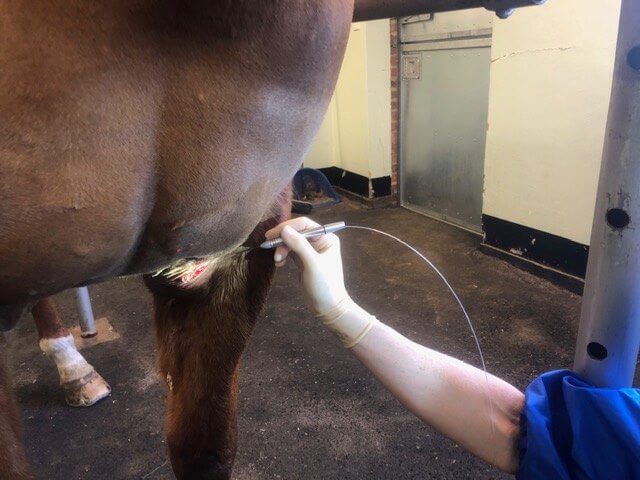
At Avonvale Equine, our skilled equine vets are experienced at investigating and treating equine sarcoids. We regularly undertake laser surgery to remove sarcoids from horses using standing surgery. Clients and their equines who are within our coverage area also benefit from our high quality pre- and post-operative care. We also help horse owners and purchasers decide what to do about sarcoids as part of our pre-purchase examinations and free zone visits.
If you are concerned about a lesion, lump or bump on your horse or a new horse that you are considering purchasing, please call the practice on 01295 670 501 to book an appointment with one of our equine vets.
Register Your Horse/s At Avonvale Equine
If you are looking for an equine vet for your horse/s that delivers high quality routine and 24/7 in-house emergency care, why not get in touch with us? We look after all types of horses, ponies, donkeys and mules within our coverage area, which includes large parts of Oxfordshire, Warwickshire, Northamptonshire, Birmingham, The Midlands as well as areas of Worcestershire, The Cotswolds, and Gloucestershire.
Our experienced and skilled equine vets are passionate about helping both commercial and individual owners look after their equines excellent equine veterinary care, which includes the identification and treatment of sarcoids.
To register your horse with us, complete our new client registration form online or call our practice on 01295 670 501.





.jpg)