A Complete Guide to Monitoring Equine Health
Keeping your horse or donkey at a healthy weight is essential for long-term wellbeing. Weight management can be challenging, especially with seasonal changes, fluctuating grass growth, and varying exercise levels. Overweight equines are at significantly higher risk of laminitis, arthritis, and Equine Metabolic Syndrome (EMS) — conditions that can be painful, debilitating, and difficult to manage.
One of the simplest and most effective ways to monitor weight is through Body Condition Scoring (BCS). This hands-on method allows owners to assess fat and muscle distribution without any specialist equipment, helping you identify changes early and respond appropriately.
What Is Body Condition Scoring?
Body Condition Scoring evaluates the amount and distribution of fat and muscle across your horse’s body. Two systems are commonly used:
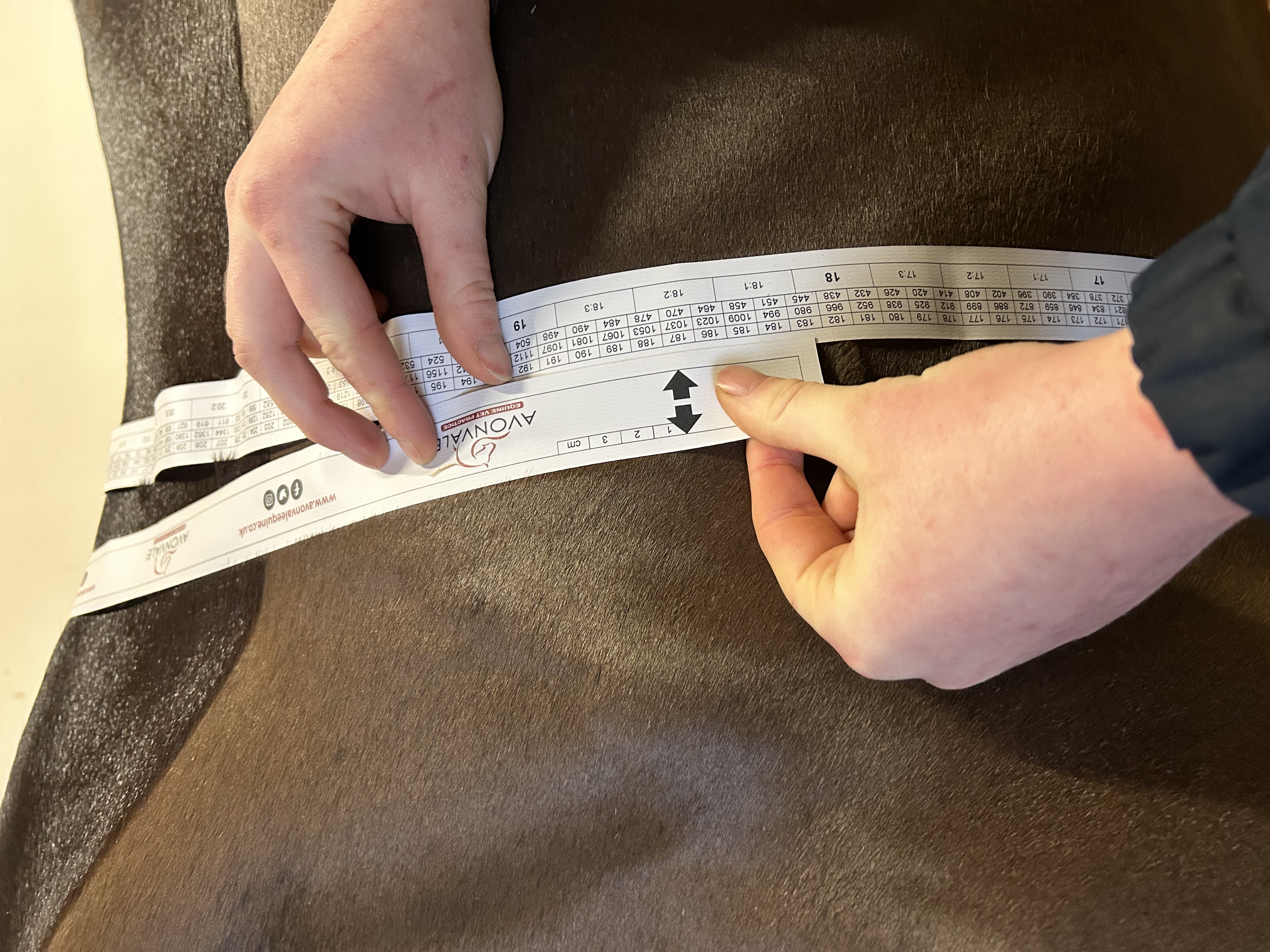
Unlike weight tapes — which can be inaccurate and do not account for breed differences — BCS provides a holistic, tactile assessment. At Avonvale, we recommend scoring your horse every two weeks, ideally at the same time of day and by the same person. Combining BCS with weight tape measurements helps build a clear picture of your horse’s weight trends throughout the year.
Your horse’s body condition influences:
- Athletic performance
- Reproductive health
- Metabolic stability
- Joint comfort
Horses with higher energy requirements — such as youngsters, pregnant mares, or lactating mares — may need additional nutritional support to prevent their score dropping below 3. If your horse struggles to gain or lose weight, a veterinary assessment is essential to rule out underlying disease.
How to Body Condition Score Horses
BCS is assessed across three key regions:
- Neck and shoulders
- Abdomen
- Hindquarters
Each area should ideally score 2.5–3 for a healthy horse.
- Nuchal ligament assessment: The nuchal ligament runs from the poll to the withers. If the crest above it feels hard, thickened, or difficult to move, this is concerning — especially in mares and geldings. A large, firm crest is strongly associated with metabolic disease and increased laminitis risk.
- Shoulder blade palpation: Run your hands down the shoulder blade. Fat pads may develop in front of or behind the shoulder. These pads indicate excess fat storage and should be monitored closely.
- Ribs: Ribs should be easily palpable with minimal pressure. If you need firm pressure to feel them, your horse is likely overweight.
- Withers and spine: These areas should have only a thin layer of fat. You should be able to feel the bones clearly without seeing them protrude.
- Back profile: You should be able to lay your hand flat across the back.
- A dip with fat either side of the spine indicates excess fat.
- A table-top appearance suggests obesity.
- Hips should be visible but not protruding.
- Hindquarters should be rounded, not apple-shaped.
- An apple or “peachy” shape indicates excessive fat deposition.
Recording scores in a table or graph helps you track changes over time and respond quickly to seasonal fluctuations.
Horse Body Condition Scoring Chart (0–5)
0 – Emaciated (Extremely Underweight)
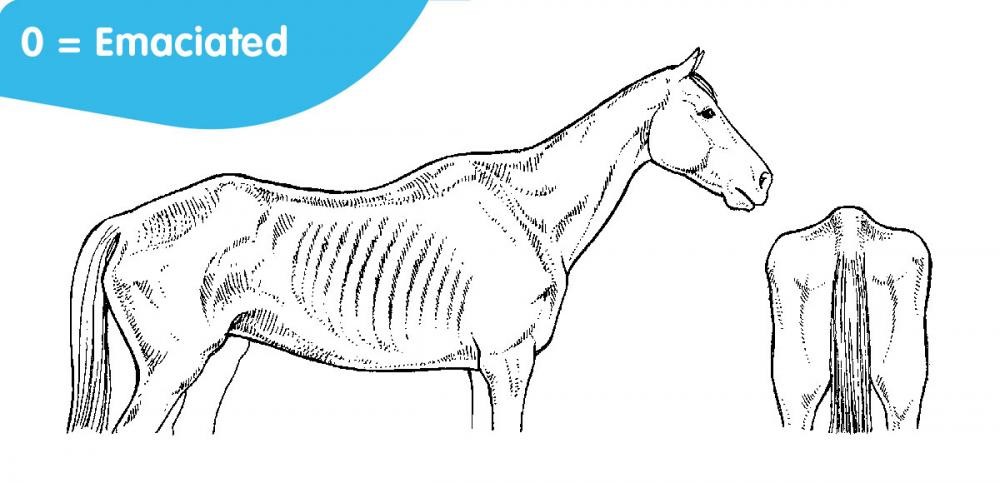
- Extremely thin neck with no muscle or fat
- No fat anywhere on the body
- Ribs protruding
- Spine, pelvis, and hips clearly visible
- Tail bone protruding
- Deep hollows either side of the spine
- Large gap between hind legs
1 – Thin (Underweight)
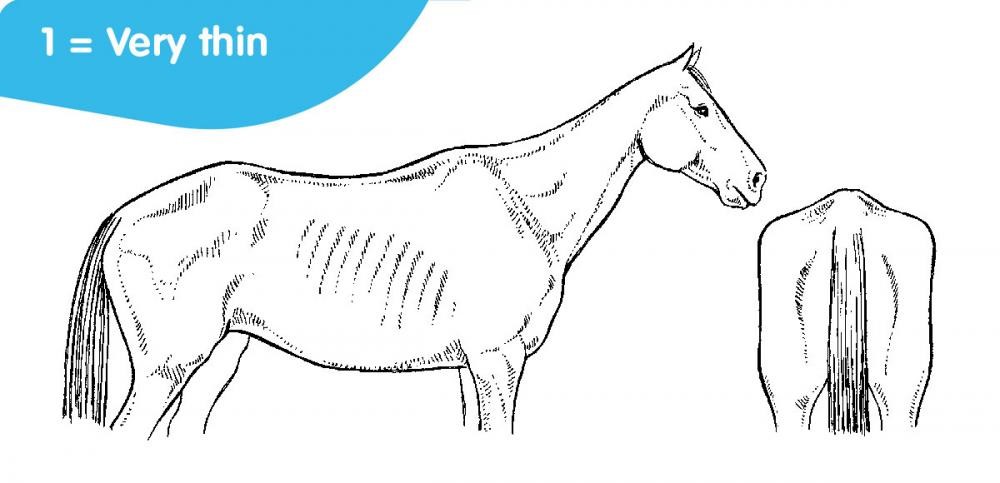
- Thin neck with minimal muscle
- Small amount of fat present
- Ribs easily seen
- Spine and hips visible
- Tail bone slightly protruding
- Hindquarters sunken
2 – Lean (Reasonable)
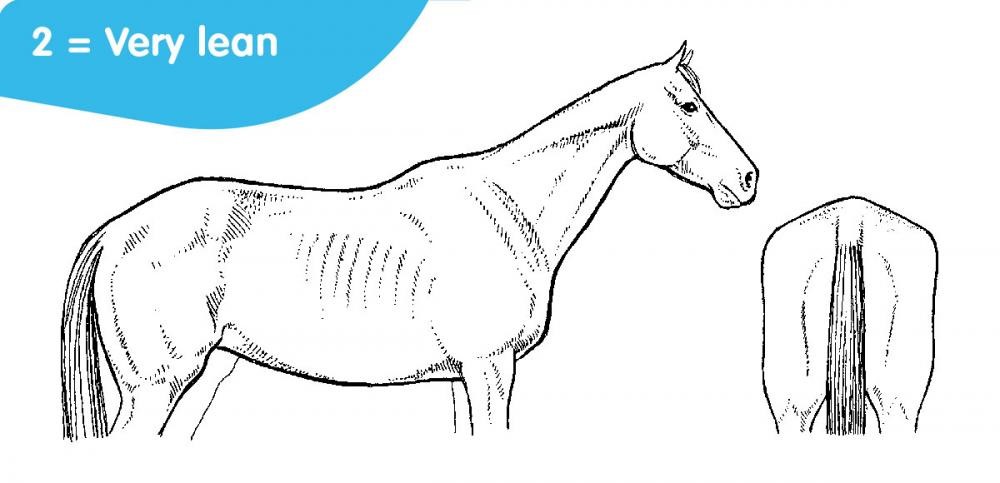
- Neck somewhat thin
- Neck musculature visible
- Thin fat layer
- Ribs just visible
- Spine and hips palpable
- Small gap between hind legs
3 – Optimum (Healthy)
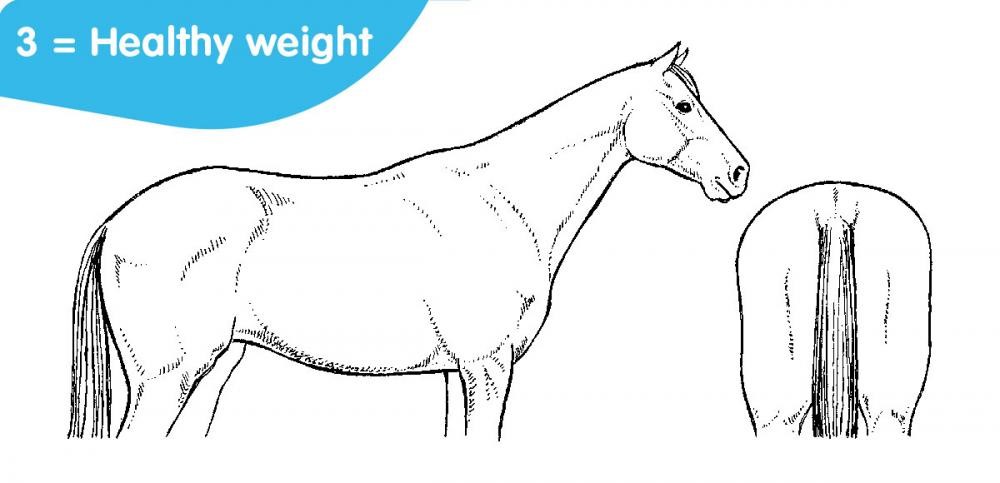
- Neck musculature present
- No cresting (except stallions)
- Ribs/spine/hips not visible but easily palpable
- Hindquarters rounded
4 – Overweight (Unhealthy)
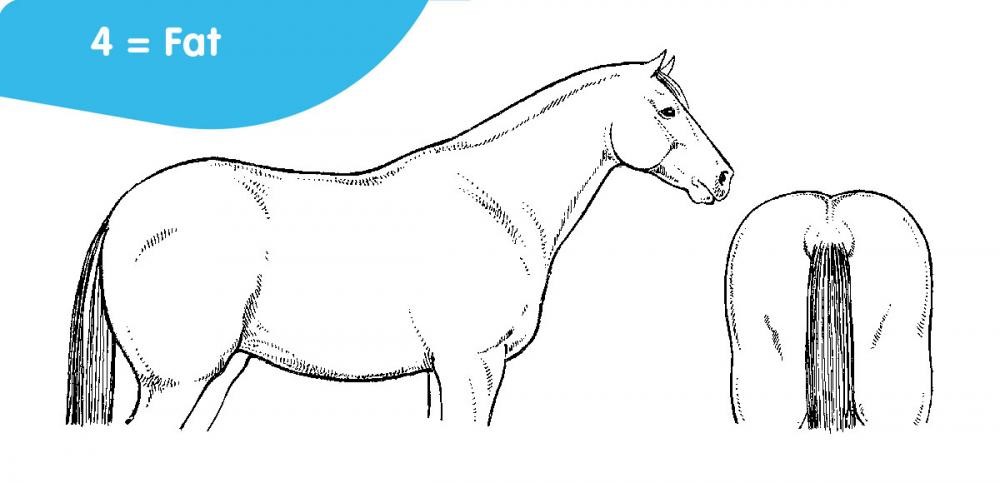
- Neck musculature not visible
- Crest developing
- Ribs felt only with firm pressure
- Fat pads at shoulders and tail head
- Pelvis/hips difficult to palpate
- Rounded “peachy” hindquarters
- Valley along spine
5 – Obese (Extremely Unhealthy)
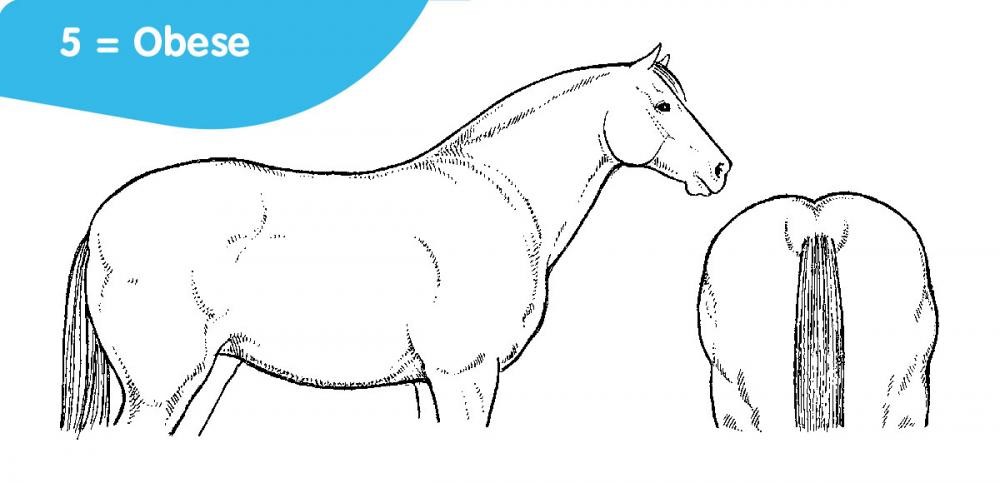
- Wide, firm neck
- Large crest
- Thick fat covering ribs, hips, spine
- Table-top back
- Deep valley along spine
- Large fat pads at shoulders and tail head
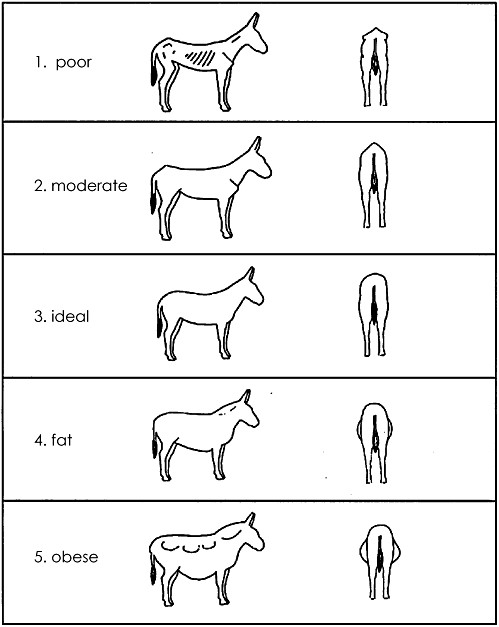
Body Condition Scoring Donkeys
Donkeys deposit fat differently from horses, so the Donkey Sanctuary 1–5 scale is used. Five areas are assessed:
- Neck and shoulders
- Withers
- Ribs and abdomen
- Spine
- Hindquarters
1 – Underweight
- Very thin neck
- Prominent withers
- Visible ribs
- Tucked abdomen
- Hips easily palpated
2 – Lean
- Small muscle layer
- Slight fat over withers
- Ribs easily felt
- Poor musculature
- Hips easily palpated
3 – Healthy
- Smooth neck–shoulder junction
- Good muscle and thin fat layer
- Ribs felt with light pressure
- Trim abdomen
- Rounded hindquarters
4 – Overweight
- Crested neck
- Thick shoulder fat
- Pendulous abdomen
- Ribs felt only with hard pressure
- Rounded hindquarters
5 – Obese
- Very crested neck
- Thick shoulder fat
- Large uneven fat deposits
- Very pendulous abdomen
- Spine difficult to palpate
Health Risks of Overweight Horses and Donkeys
• Laminitis
Overweight equines are at high risk of laminitis, a painful condition that can cause rotation of the pedal bone. Recovery requires intensive management and veterinary/farriery support. Prevention through weight control is far easier than treatment.
• Equine Metabolic Syndrome (EMS)
EMS occurs when the metabolism becomes deranged due to insulin resistance. It affects:
- Energy metabolism
- Fat composition
- Blood vessel health
- Clotting
- Inflammation
Keeping your horse slim and fit is one of the best ways to reduce EMS risk.
• Arthritis
Excess weight places additional strain on joints, accelerating wear and contributing to chronic pain. Weight loss significantly improves comfort and treatment outcomes.
Final Thoughts
Body Condition Scoring is one of the most valuable tools owners have for maintaining equine health. With regular monitoring, thoughtful feeding, and appropriate exercise, you can keep your horse or donkey in optimal condition all year round.
Register Your Horse/s At Avonvale Equine
If you are looking for an equine vet for your horse/s that delivers high quality routine and 24/7 in-house emergency care, why not get in touch with us? We look after all types of horses, ponies, donkeys and mules within our coverage area, which includes large parts of Oxfordshire, Warwickshire, Northamptonshire, Birmingham, The Midlands as well as areas of Worcestershire, The Cotswolds, and Gloucestershire.
Our experienced and skilled equine vets are passionate about helping both commercial and individual owners look after their equines excellent equine veterinary care, which includes the identification and treatment of sarcoids.
To register your horse with us, complete our new client registration form online or call our practice on 01295 670 501.





.jpg)