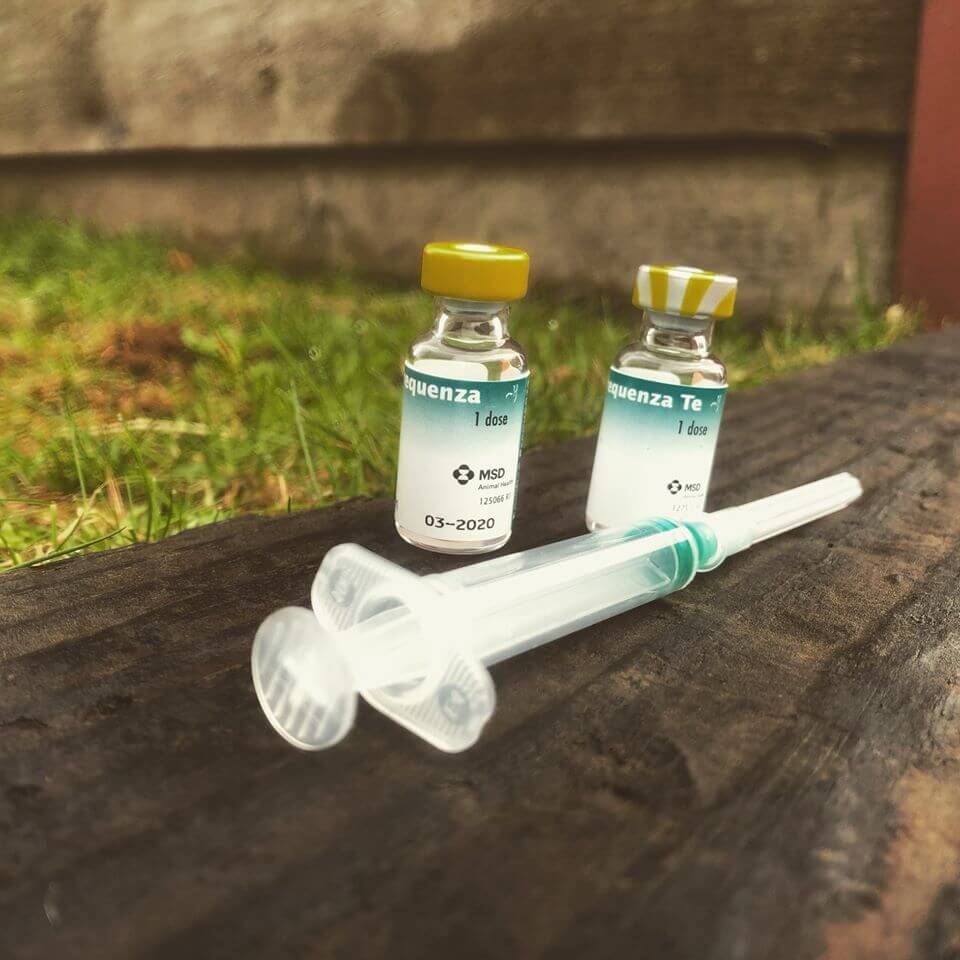
Equine vaccines are an important part of preventative care for horses. There are a range of vaccinations available for horses to help prevent a variety of diseases, some of which can be life-threatening. These include equine influenza, tetanus, equine herpes virus (EHV), equine rotavirus and strangles. By taking a preventative approach to horse health, it is often possible to reduce the impact of or prevent a number of diseases, which is beneficial for both the horse and owner.
At Avonvale Equine Vet Practice, we offer vaccinations as part of our routine healthcare services. Routine vaccinations can usually be completed on one of our zone visit days, which are available throughout our coverage area. Our skilled and experienced equine vets are always happy to discuss your horse’s individual vaccination requirements.
In this article, we outline the available equine vaccines, which horses require them and how often they should be given. Find out more about Equine Influenza, Tetanus, Equine Herpes Virus (EHV), Equine Rotavirus and Strangles vaccinations.
Equine Influenza
What Is Equine Flu?
Equine influenza is a highly infectious viral respiratory disease, characterised by fever and coughing, which may spread rapidly among susceptible horses. Mildly affected horses usually recover over 2-3 weeks, but severely affected cases may take at least six months to recover full health and performance potential.
Which Horses Need The Equine Influenza Vaccine?
At Avonvale Equine, we recommend that all horses are vaccinated against influenza. In the UK, horse racing and competition authorities insist upon influenza vaccination to help prevent disruption to events and safeguard equine health. If you are planning on competing your horse, it is your responsibility to check your horse’s vaccinations comply with the governing body’s vaccination protocol.
How Often Should They Be Vaccinated?
Standard influenza vaccination protocol (from 1st January 2024) is:
- 1st injection from six months of age
- 2nd injection 21 – 60 days later
- 3rd injection 120 – 180 days later
- Thereafter boosters at 6 – 12 month intervals (always check with your governing body, and discuss risk status with your vet)
Equine Tetanus
What Is Equine Tetanus?
Equine Tetanus is usually fatal and is caused by the soil borne bacterium clostridium tetani contaminating any wound, however small. The risk of equine tetanus is significant, approximately 90% of unvaccinated horses who contract tetanus sadly don’t survive. Those that do survive require intensive veterinary care for at least 6 weeks.
Which Horses Need The Equine Tetanus Vaccine?
Usually, we recommend vaccinating all horses against tetanus.
How Often Should They Be Vaccinated?
The Equine Tetanus vaccination schedule is often combined with the Equine influenza vaccination and if you follow the initial vaccination course for the combined vaccination your horse should be vaccinated against tetanus. Subsequent boosters for tetanus are only needed every 2 years.
Equine Herpes Virus (EHV)
What Is The Equine Herpes Virus (EHV)?
There are five types of equine herpes viruses which can affect horses causing a variety of disease syndromes of which EHV 1 and EHV 4 are the most clinically important. EHV 1 and 4 can cause influenza-like respiratory infections in horses but may also cause abortion in pregnant mares and, less commonly, serious neurological disease.
Which Horses Need The Equine Herpes Virus Vaccination?
Any horse can have the EHV vaccine, but it is particularly important for breeding mares, those residing on a stud, or horses who travel away from there home environment regularly – many big studs will insist a mare is vaccinated before being allowed to foal there.
We work closely with commercial breeders, stud farms and individual clients with a breeding mare, to ensure that their horses are suitably vaccinated against the Equine Herpes Virus (EHV).
We recommend that all horses who regularly leave their home environment, mixing at competitions and clinics, should be vaccinated against Equine Herpes Virus (EHV).
How Often Should They Be Vaccinated?
The protocol for protection against the respiratory form of infection is:
- First injection from five months of age
- Second injection 4-6 weeks later
- Booster injections every 6 months
To protect against abortion caused by EHV, vaccinations should be given to pregnant mares during the 5th, 7th and 9th months of pregnancy.
Equine Rotavirus
What Is Equine Rotavirus?
Equine rotavirus damages the lining of the intestines, inhibiting digestion and absorption of food. It is one of the most common causes of diarrhoea in foals less than six months of age. Foals become infected when they ingest materials or lick surfaces contaminated with infected faeces.
Which Horses Need The Equine Rotavirus Vaccine?
Pregnant maresare vaccinated against equine rotavirus to protect their foals from suffering diarrhoea or illness caused by the virus. Pregnant mares are vaccinated in the 8th, 9th, and 10th months of pregnancy in order that the antibodies can be transferred to the foal via the mare’s colostrum.
We work with commercial breeders, stud farms and individual clients with a breeding mare, to ensure that their horses are suitably vaccinated against the Equine Rotavirus.
Equine Strangles
What Is Equine Strangles?
Equine strangles is a highly contagious upper respiratory infection caused by a bacteria called streptococcus equi equi. An estimated 600 outbreaks of strangles occur each year in the UK alone. Historically there has been problems with developing a strangles vaccine. However, we now have a new protein-based strangles vaccine, Strangvac, which has been developed.
As with flu or Covid 19 vaccines, the disease is not eliminated in all cases, but horses are much less likely to show signs of illness and signs are less severe. Crucially, the rate of abscesses developing is vastly reduced, which in turn means that horses are much less likely to become carriers of disease.
It is important to note that vaccinated horses can be differentiated from horses which have developed antibodies as a result of disease. This means that the blood test that is commonly used to screen horses for recent exposure to streptococcus equi equi, can be used in vaccinated horses. It will also not interfere with guttural pouch scope results.
Which Horses Need The Equine Strangles Vaccine?
In theory, if all horses were vaccinated against Equine strangles, it might be possible to eventually eradicate strangles. However, this is unrealistic, and efforts should be concentrated to vaccinate horses at medium to high risk:
- Horses at livery yards with movement on and off the yard
- Horses travelling to training, competition or stud
- Horses which are thought to have contacted a clinical case
How Often Should They Be Vaccinated?
Vaccination schedule is as follows:
- Primary course of two injections 4 weeks apart
- With a booster given 6-12 months later, this frequency depends on risk assessment by your vet
Equine Vaccine Reactions
A small percentage of horses experience a reaction after being vaccinated. Common vaccine reactions include lethargy, fever and injection site soreness. These are usually short-lived. If your horse appears unwell, speak to your vet for advice. To minimise risks, avoid vaccinating 2-3 weeks before important events, and report any significant adverse events to your vet. Additionally, if your horse has previously had a reaction then discuss it with the vet prior to any future vaccinations being given.
It is advised that only healthy horses should be vaccinated. If your horse is showing any signs of being unwell, discuss this with your vet prior to any vaccine being given. It is recommended that a horse is given a couple of quiet days after being vaccinated, with no heavy sweating and only light work.
Equine Vaccines And Routine Healthcare At Avonvale Equine
At Avonvale Equine, we are strong advocates for equine vaccines where they are appropriate for the equine’s individual needs. As part of routine equine healthcare, vaccines can help your horse stay healthy by preventing or reducing the risk of a variety of diseases, some of which can be life threating. We deliver vaccinations during our zone visit days, which makes vaccinations both easily accessible and affordable for clients.
The coverage area for our equine vet practice includes most of Oxfordshire, Warwickshire, Northamptonshire, Gloucestershire, Worcestershire, parts of Cheltenham, Birmingham, The Midlands and The Cotswolds. To find out more about our free zone visits and view our zone visit areas, please visit our zone visits page.
Our skilled and experienced equine vets are always happy to discuss your horse’s individual vaccination requirements and any concerns that you may have about potential equine vaccine reactions.
Register Your Horse/s At Avonvale Equine
If you are looking for a new equine vet for your horse/s that delivers excellent routine healthcare, why not contact our practice?
Our experienced and skilled equine vets are passionate about helping both commercial and individual owners look after their equines though delivering the highest standards of equine healthcare. From our office in Upton near Banbury, our independent ambulatory equine vet practice delivers excellent veterinary care to clients.
To register your horse with us, complete our new client registration form online or call our practice on 01295 670 501.