Ragwort poisoning is a very serious and usually fatal condition. Ragwort poisoning occurs as a result of horses eating ragwort (Senecio Jacobaea), a toxic plant that causes liver damage. This blog article outlines the symptoms of ragwort poisoning in horses, and highlights what you can do to prevent it.
Symptoms of Ragwort Poisoning in Horses
The following are the main symptoms of ragwort poisoning in horses. If you think your horse has ragwort poisoning or liver failure (which may have a different cause), call your vet immediately.
Symptoms of Ragwort Poisoning:
- Lethargy
- Photosensitivity – areas of pink skin become inflamed when exposed to sunlight
- Significant weight loss despite continuing to eat well
- Blindness
- Difficulty breathing
- Loss of balance
One key point to remember about ragwort poisoning is that there may be no symptoms present until the condition has progressed significantly. Just because your horse isn’t exhibiting any symptoms of ragwort poisoning, this does not mean that they have never consumed ragwort or that they do not have liver damage. This is why it is imperative for horse owners and landowners to be able to identify ragwort and remove it safely and completely.
How to Prevent Ragwort Poisoning
The only way to prevent ragwort poisoning is to ensure your horse does not consume any ragwort. Ragwort poisoning has a cumulative effect, in that it builds up over time and is no less dangerous if your horse consumes a small amount of ragwort over many years, versus eating a large amount in one go. It is impossible to know for sure that your horse has never consumed ragwort (e.g. before you purchased them), so consuming just a small amount more could be enough to prove fatal.
Below are some tips on how to prevent ragwort poisoning:
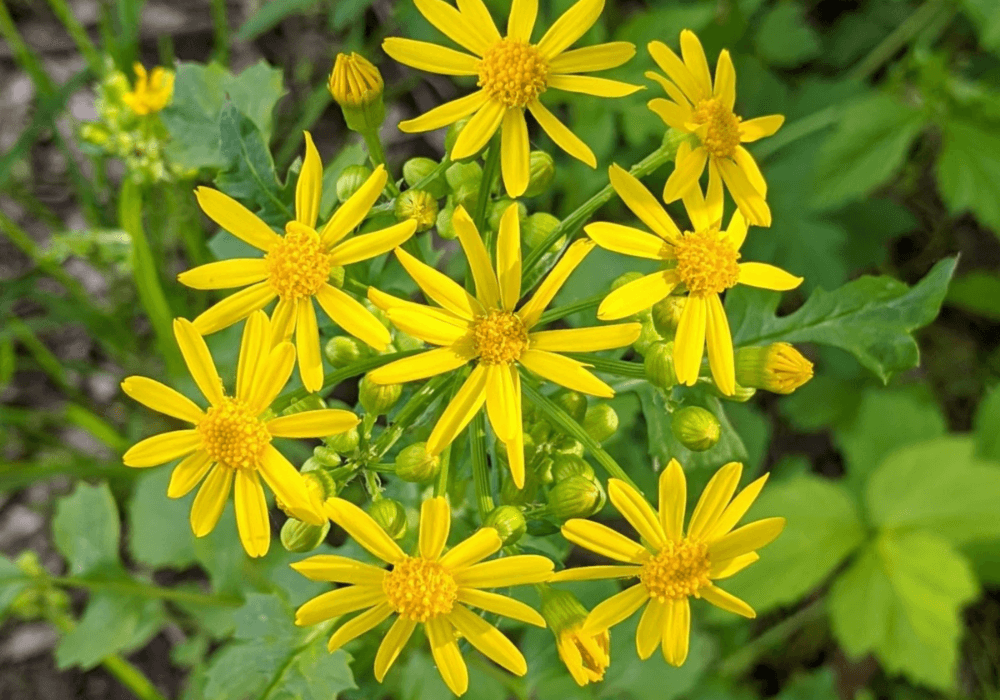
- Know how to identify ragwort at all stages in the plant’s lifecycle. Seedlings appear from the autumn onwards, with rosettes forming from early spring and mature plants flowering from May to October. World Horse Welfare have a useful guide with photos.
- Always remove the whole plant. All parts of the ragwort plant are toxic. Always remove the entire plant, including the roots
- Dispose of ragwort effectively. Ragwort is just as toxic dead as it is alive, except it can lose its bitter taste. This makes it more palatable and therefore more likely to be eaten. Burning is usually the most effective method of disposal.
- Check for and remove ragwort regularly. Ragwort control is a constant job and it’s vital to keep on top of it to prevent a major problem.
- If ragwort is spreading onto your land from the surrounding area, contact Defra for advice.
- Remember that ragwort can also be harmful to humans, so always cover your hands, arms and legs when handling ragwort. If removing ragwort that has flowered, wear a face mask to prevent pollen inhalation.
For more information on how to get rid of ragwort, please see our handy guide.
Avonvale Equine Vets | Independent Equine Vet Practice
Our highly qualified and dedicated equine vets, based in Upton, near Banbury, are experienced in diagnosing and treating a range of conditions. We offer free weekly zone visits for routine and non-emergency appointments, covering Warwickshire, Oxfordshire, Gloucestershire and Worcestershire. If you are looking for an independent, reliable equine vet practice with a team of experienced equine vets, Register your horse, pony, donkey or mule with us today.












.jpg)