At Avonvale Equine, we are always reviewing the latest research and updating the way we manage parasite control programs sustainably for horses. In many cases, one of the best and most common ways of managing parasite control is to complete faecal worm egg counts, which helps to detect the presence of heavy worm burden in horses while also identifying the type of worms present. It is an effective way to detect and treat horses shedding high numbers of parasite eggs onto the pasture, which also aims to reduce the worm burden for the whole herd.
In this article we explore the key problems that are associated with a high worm burden in horses, while also outlining some of the key symptoms that you can look out for in your horses.
Problems Associated With A High Worm Burden In Horses
A high worm burden is cause of a wide range of clinical issues in horses, ranging from the most critical like colic through to the less severe including diarrhoea and weight loss, which while often not immediately life threatening, they require careful management.
Colic
Colic is one of the most severe and clinically critical problems that we see in our caseload, which is associated with a high worm burden. It is most often seen in youngstock but can affect any horse that is carrying a very high worm burden. Most commonly ascarids (large roundworms) or tapeworm larvae can cause a number of issues in horses, ranging from an uncomfortable spasmodic colic which requires emergency veterinary treatment through to a complete blockage of the gut. In the case of a complete blockage, lifesaving surgery is required to clear the blockage.
In every case, colic is always an emergency and requires urgent veterinary attention. If you suspect that your horse is displaying symptoms of colic, please contact your equine vet. Avonvale clients and horses within our coverage area are advised to call our practice on 01295 670 501 whenever required for veterinary assistance from our practice team during normal opening hours and our on-call 24/7 emergency equine vets.
Diarrhoea
Diarrhoea can also be caused by a high worm burden. While this is not usually immediately life threating, it still requires prompt veterinary attention. Any type of worms can cause diarrhoea in horses, but the most dangerous type is cyathostomins (small redworms). Cyathostomins parasites migrate into the gut lining during the winter and can then emerge on mass when the weather starts to improve and the temperature rises. Unfortunately, this mass emergence can cause significant gut damage that results in severe diarrhoea, which can prove fatal to horses.
Weight Loss & Poor Condition
Weight loss and poor condition are very common problems that result from a high worm burden. They can affect horses of all ages and can manifest as a pot-bellied appearance and a dull coat. While there are many potential causes of weight loss in horses, a high worm burden should be considered as a potential cause during initial investigations. In youngstock, a high parasite burden can also stunt normal growth as the parasites compete with the horse’s digestive system and consume nutrients that would otherwise be used for natural growth.
Cough & Nasal Discharge
While there are many possible causes of a cough or nasal discharge in horses, these symptoms can sometimes be caused by a high worm burden. Although uncommon, the migration of certain types of roundworms through the lung can cause coughing and nasal discharge in some horses. Lungworm can also affect horses and is most likely to be seen in horses or ponies that co-graze with donkeys. This is because donkeys can commonly carry lungworm without showing any symptoms.
The Importance Of A Targeted Equine Worming Programme
In many cases, horses living with a high worm burden may not show any obvious symptoms until the problem is very advanced. Therefore, a targeted equine worming programme is an essential part of routine horse healthcare. An effective and targeted worming programme should be able to detect a worm burden before it progresses into a severe life-threating disease.
Faecal Worm Egg Count
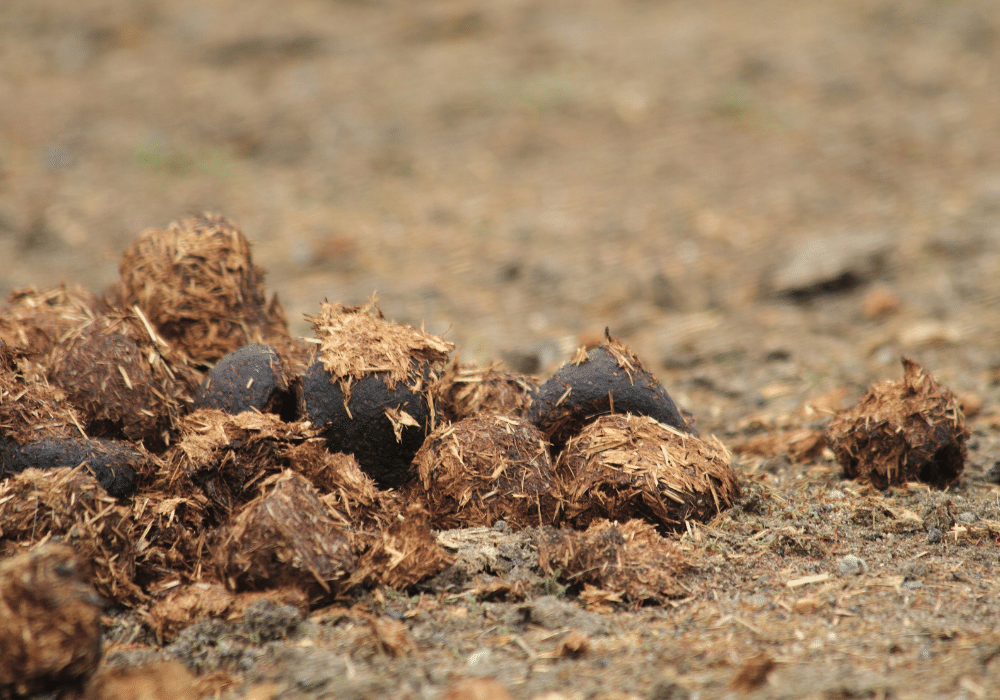
Faecal worm egg counting is one of the most useful tools available for an equine worming programme. However, it doesn’t necessarily always detect how high a horse’s worm burden is. It is able to detect how many eggs the horse is shedding (although it is often assumed that a horse shedding a high number of eggs has a high worm burden). Treating horses that are shedding a high number of eggs helps to reduce the number of parasites being transmitted via the pasture and therefore reduces the parasite burden within the whole herd, which improves their care.
Removing manure from the pasture is also an effective way to reduce the worm burden. Harrowing, however, is ineffective and will not reduce the transmission of parasites.
Specific Parasite Tests
Due to advances in equine medicine, there are now tests available for specific parasites that can more accurately indicate the level of worm burden in horses. The tapeworm saliva test is one of these and is an effective way to determine the presence of tapeworms. Specific parasite tests are an exciting development in equine medicine and although they currently cover a limited number of parasites, they are set to evolve in the future and will become an even more useful addition to the diagnostic toolkit.
Low Worm Burden In Horses
When an effective equine worming programme is in place, it is possible to achieve and maintain a low worm burden. Fortunately, a low worm burden is of little consequence for adult horses. Maintaining a low burden of parasites within a herd is actually a great goal for horse owners. Aiming to eradicate parasites completely is often unrealistic.
Due to the severity of many problems associated with a high worm burden, using a range of different strategies to sustainably control parasite burdens within horses is the most effective approach. This is especially important as there is an increasing resistance to antiparasitic drugs worldwide.
Manage Your Horse’s Worm Burden With Our Annual Worm Control Package
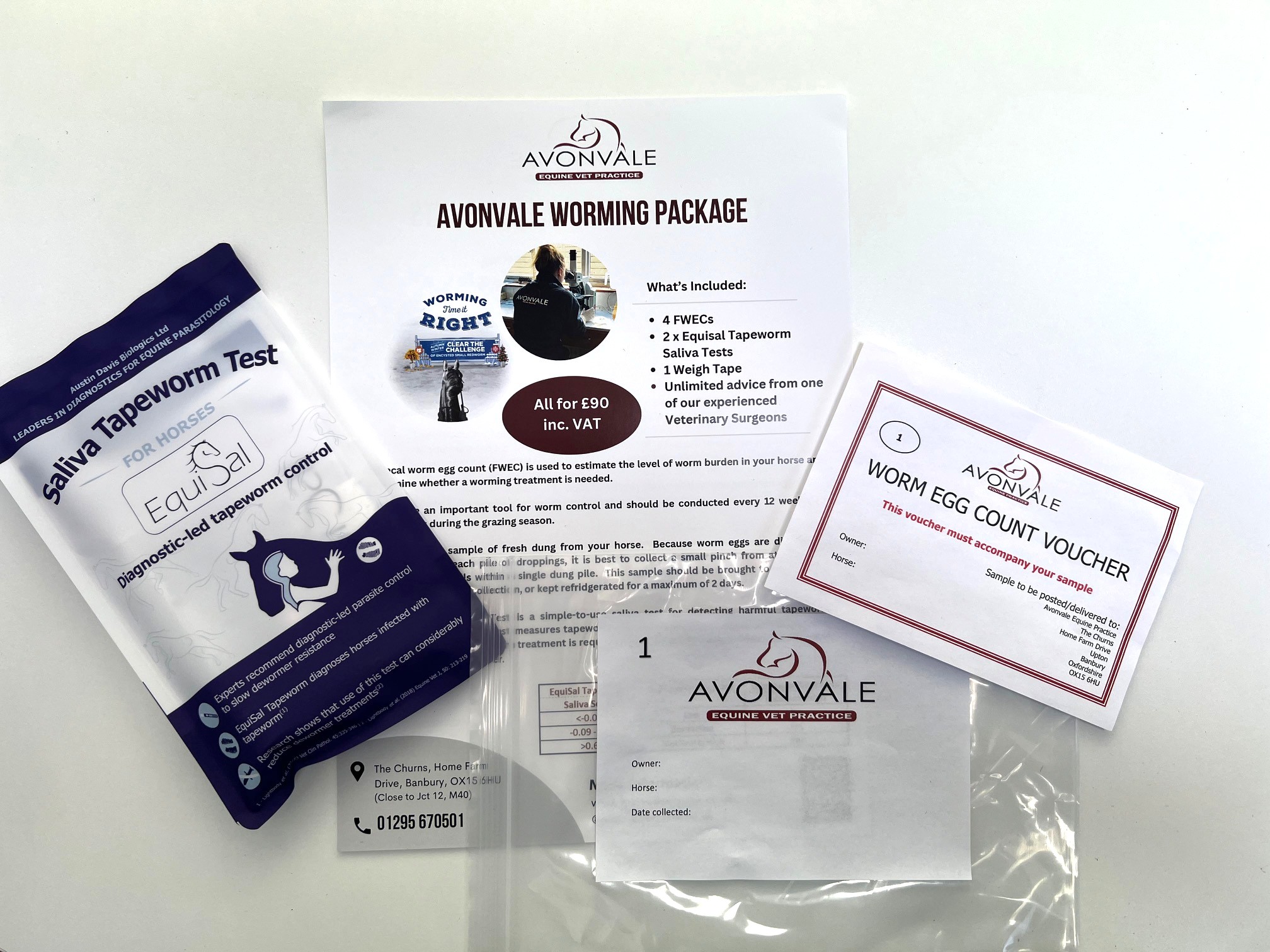
To help commercial and individual horse owners effectively manage their horse/s worm burden, we offer a comprehensive annual worm control package that is suitable for horses aged 2 years and above. The package includes four faecal worm egg counts, one weight tape, one Equisal tapework saliva test and unlimited up-to-date advice from our knowledgeable equine vets.
Our annual work control package is available to clients and horses within our coverage, which includes most of Oxfordshire, Warwickshire, Northamptonshire, Gloucestershire, Worcestershire, Birmingham, The Midlands and The Cotswolds.
Find out more about our Annual Worm Control Package and download our package flyer.
Register Your Horse/s At Avonvale Equine
If you are looking for a new equine vet for your horse/s that delivers excellent routine and 24/7 in-house emergency care, why not get in touch with us?
Our experienced and skilled equine vets are passionate about helping both commercial and individual owners look after their equines though delivering the highest standards of equine healthcare including excellent routine healthcare, which includes our Annual Worm Control Package for managing a horse’s worm burden.
To register your horse with us, complete our new client registration form online or call our practice on 01295 670 501.