Liver disease in horses is a serious condition which is often not noticed until it has progressed to an advanced stage. In many cases, it is not identified until between 70% and 80% of the liver is damaged. Despite the severity of the condition, horses can recover with early diagnosis and appropriate veterinary treatment. Horses with liver disease may also require specialist dietary management and on-going care to manage the condition. Common causes of equine liver disease include ingestion of toxic plants such as Ragwort, infections and certain metabolic disorders.
The equine vets at Avonvale Equine Vet Practice are experienced at investigating and treating liver disease in horses as part of our high-quality veterinary care for horses within our coverage area, which includes most of Oxfordshire, Warwickshire, Northamptonshire parts of Gloucestershire, Worcestershire, Birmingham, The Midlands and The Cotswolds.
In this article, we explain what the liver does, what the common symptoms of liver disease in horses are, the key causes of liver disease in horses, how we investigate liver disease and how we treat liver disease.
What Does The Horse’s Liver Do?
The equine liver is a large organ within the abdomen which is responsible for breaking down and digesting carbohydrates, fats and proteins. It also helps to break down toxins produced by the horse, many drugs which we use in horses, or toxins that are ingested. In addition to its responsibilities in breaking down substances, the liver also plays a vital role in manufacturing proteins and storing vitamins and minerals. It plays a vital role in the manufacture of blood cells and assists with the immune response.
A horse’s liver has a vast reserve, and can regenerate to an extent, so horses often don’t show signs of liver disease until a large proportion of the liver is severely affected.
In this article, we will be concentrating on liver issues in adult horses, as foals have a different set of problems that can occur affecting the liver, which we won’t explore further here.
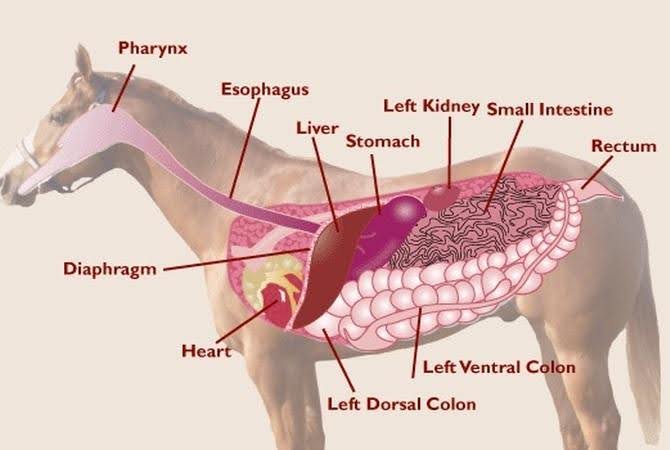
Image: equimed.com
What Are The Signs/Symptoms Of Liver Disease In Horses?
Equine liver disease can present a range of different signs/symptoms in horses, many of which are non-specific and slow to develop. This makes it challenging to detect and diagnose, especially at an early stage.
Our equine vets look for a range of symptoms when investigating suspected cases of liver disease in horses including:
- Poor performance – in ridden horses, lethargy and poor performance can be noticed with liver disease, and this can be very subtle.
- Weight loss – one of the first signs noticed by most owners is weight loss for no apparent reason. We would usually want to rule out other, more common, causes of weight loss such as dental disease, but the liver should be checked in cases of unexplained weight loss.
- Jaundice – this is a yellow tinge to the mucous membranes including in severe cases the gums. This does not occur in all cases, but if spotted is a significant symptom that should be acted upon.
- Photosensitisation – this classic sign of liver disease can look like sunburn. Pink or white areas of the skin will become sore and red, a bit like sunburn.
- Neurological symptoms – in severe cases of liver disease, horses can display neurological signs, these include compulsive walking or circling, head pressing and depression.
- Laryngeal paralysis – this is another symptom of severe liver disease, which presents as noisy breathing, hypersalivation and an inability to swallow.
What Are The Causes Of Liver Disease In Horses?
Due to the wide range of functions that the liver carries out, there are also a large variety of things that can cause damage to the liver, which can result in liver disease that can ultimately progress to liver failure.
Plants
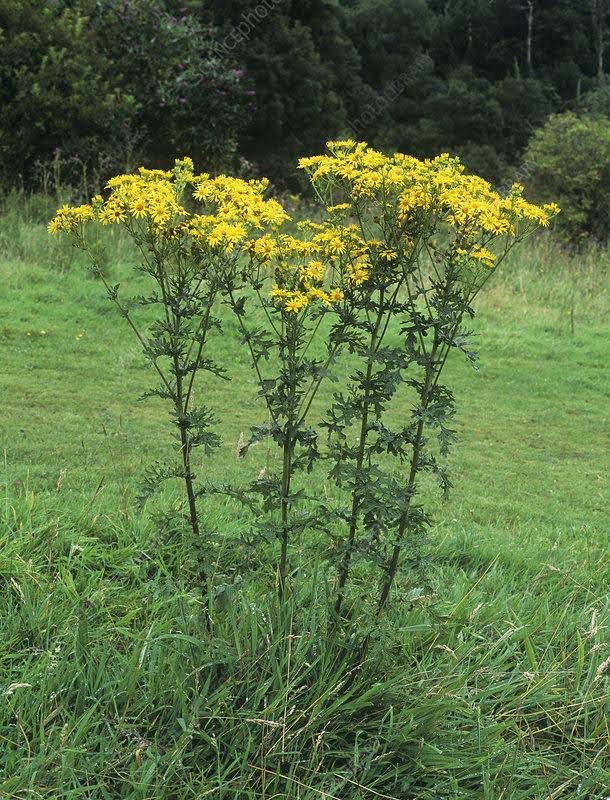
Some plants such as ragwort contain pyrrolizidine alkaloids. This toxin causes characteristic changes to the cells within the liver. It is cumulative in nature and can take a long time to show its effects. Care should be taken to ensure all ragwort is removed from paddocks regularly.
Mycotoxins
Mycotoxins can be found in mouldy, or improperly preserved hay or haylage. It is important to take care not to feed mouldy or poorly stored hay to horses. If mycotoxins are a suspected cause of equine liver disease, then the hay in question can be sent for testing to confirm this.
Toxins
Many drugs that we give to horses are metabolized by the liver. Overdoses of these or occasionally prolonged use of these can cause damage to the liver. Ragwort is a very widespread toxin and is unfortunately a common cause of liver disease in horses.
Cholangiohepatitis (Bacterial Infections)
Bacterial infections of the liver can occur. Depending on the severity and how much damage has already been done, these can be successfully treated.
Heavy Metals
High concentrations of metals such as iron in pastures can lead to liver disease. These metals have limited use in the body and are often stored in the liver. Although this is a rare cause of liver disease, it is worth assessing what the land you are grazing your horses on was previously used for if you have horses with liver disease.
Hyperlipaemia Or Hepatic Lipidosis
This condition can occur when overweight horses, ponies and especially donkeys suddenly stop eating. Fatty acids are mobilised into the blood stream and end up accumulating in the liver causing liver disease and ultimately liver failure.
Infectious Diseases
There are a few infectious diseases in horses that can affect the equine liver. However, these are very rare and can be tested for if suspected.
Liver Fluke
Liver fluke is another rare cause of liver disease that can occur in horses. This is a parasite that usually affects sheep and cattle but can be found in horses that are grazed on wet and marshy pastures- this can be tested for if suspected.
Neoplasia
There are some types of tumour that can affect the liver, this is something to be aware of especially in older horses with liver disease.
How We Investigate Equine Liver Disease
If after a clinical examination liver disease is suspected, then the first step of investigation is usually blood sampling. We can test the levels of certain enzymes produced by the liver, and these give us an idea of liver damage. Further blood testing of the levels of bile acids and certain proteins in the blood can give us an idea of liver function.
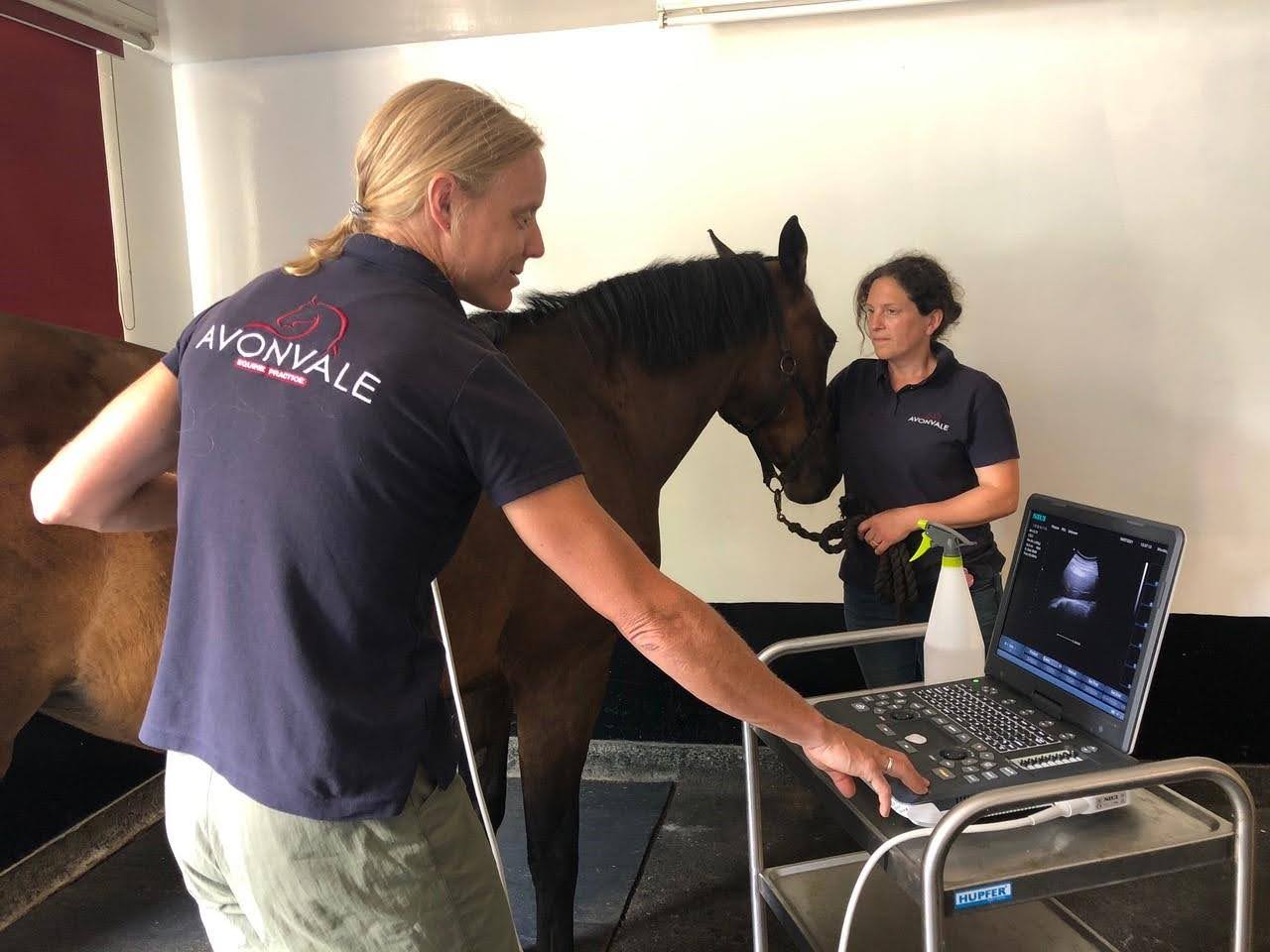
The next step is usually to ultrasound scan and biopsy the liver. This is carried out under standing sedation; this involves using a large needle to obtain a sample of liver tissue to send off to the lab. The pathologists in the lab are able to examine the cell types and look for certain patterns of damage and scarring within the liver to allow us to determine what the prognosis may be.
We can sometimes determine the source of the problem from a biopsy – for example ragwort toxicity has characteristic cell changes, but sometimes we can just see a pattern of changes that provides clues to the cause and allows us to determine the best treatment.
Recent findings have shown that many cases of liver disease or liver failure actually affect the whole herd and not just one horse/pony. Therefore, it can be useful when we find a single case of liver disease to screen the rest of the herd too. This not only helps us to pick up disease sooner in the herd but also helps to narrow down our list of potential causes.

Liver scanning
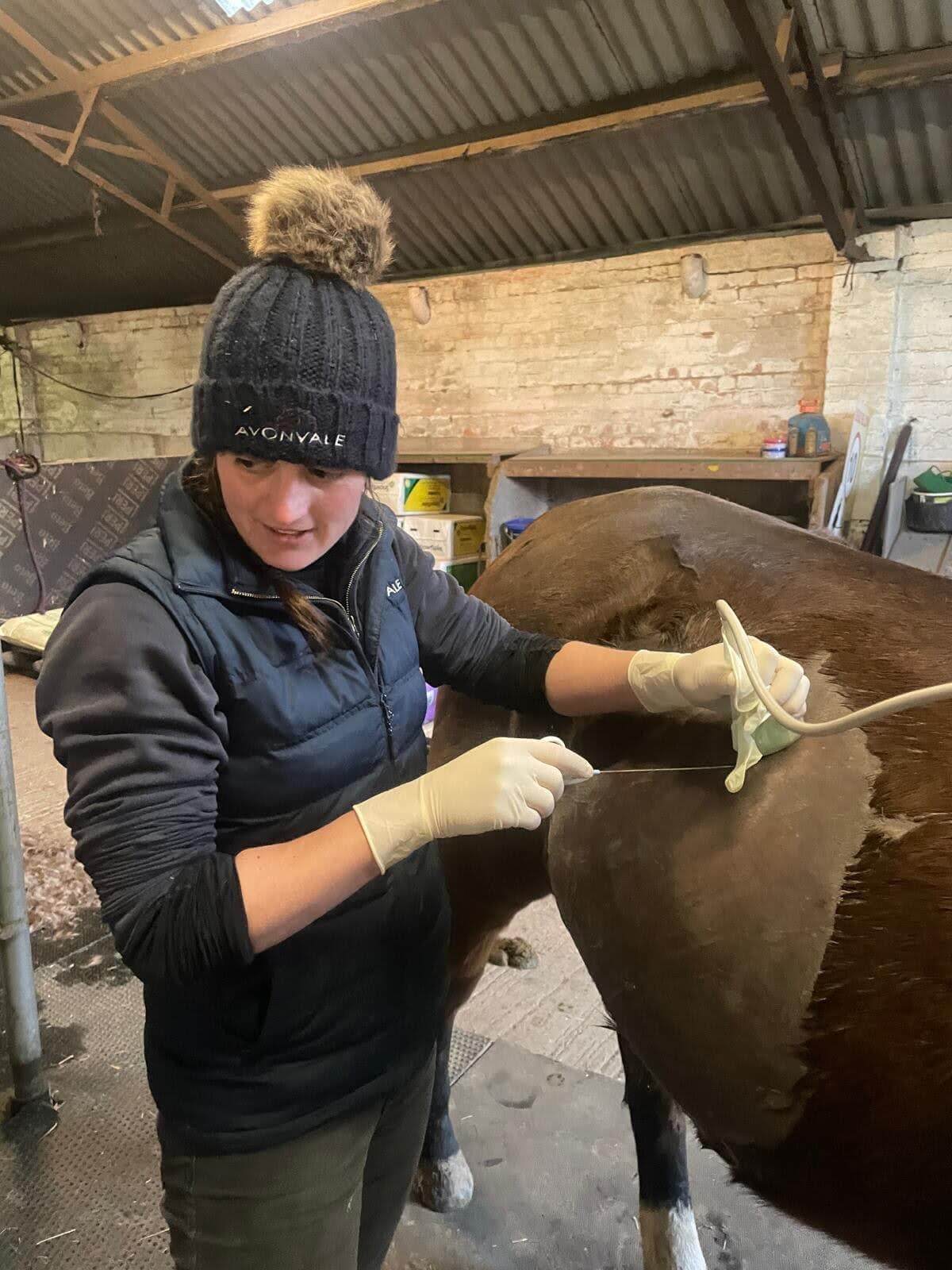
A patient undergoing a liver biopsy under ultrasound guidance
How We Treat Liver Disease In Horses
Unfortunately, liver disease in horses is very difficult to treat, and once we have reached the point where we are seeing severe symptoms of liver dysfunction, we are usually in liver failure. Following a diagnosis of liver disease, the first step towards treatment is identifying the likely cause and eliminating this where possible.
If we find that a bacterial infection is present then we can treat with appropriate antibiotics and anti-inflammatories. In some instances where we find lots of inflammation within the liver, we will opt to treat with corticosteroids to combat this inflammation. Where there is mostly fibrosis (scarring) rather than active inflammation we are often too late to be able to treat, but we can take proactive steps to support the liver.
In all cases of equine liver disease, we recommend supporting liver function with milk thistle, natural Vitamin E and SAMe. B vitamins are also often useful for supporting function. Care should be taken to ensure that any supplement chosen does not contain high levels of iron as this can be a direct toxin to the equine liver.
Investigation And Treatment Of Liver Disease In Horses At Avonvale Equine
At Avonvale Equine, our equine vets have significant experience in the investigation and treatment of equine liver disease. If your horse is showing any signs/symptoms of liver disease or you suspect that they may have ingested a toxin, this is an emergency and requires urgent equine veterinary attention.
If your horse is within our coverage area, which includes most of Oxfordshire, Warwickshire, Northamptonshire, Worcestershire, parts of Gloucestershire, Worcestershire, Birmingham, The Midlands and The Cotswolds, call our 24-hour emergency line on 01295 670 501 to speak to one of our equine vets. They will be able to help you and arrange a call-out to assess your horse. As we have our own in-house 24/7 emergency equine care service, you will always see an Avonvale Equine vet, no matter what time you need us.
For registered clients, our experienced equine vets are always happy to provide advice on steps you can take to help reduce the risk of equine liver disease. As a practice we are passionate about delivering high standards of client care to equines and their owners. Preventative care and good equine management practices have an important role to play in the reducing the risk of equine liver disease.
Register Your Horse/s At Avonvale Equine
If you are looking for a new equine vet for your horse/s that delivers excellent routine and 24/7 in-house emergency care, why not get in touch with us?
Our experienced and skilled equine vets are passionate about helping both equine businesses and individual owners look after their equines through delivering the highest standards of equine healthcare.
To register your horse with us, complete our new client registration form online or call our practice on 01295 670 501.
About The Author
Carys Morgan BVSc MRCVS
Carys has worked in equine practice since graduating from Liverpool in 2018, and after a brief stint working in Shropshire moved to Warwickshire. She enjoys all aspects of first opinion practice but is particularly interested in sports horse medicine, lameness and wounds.
When not at work, Carys can usually be found riding or vaulting, tailed by her naughty collie, Ginny. She was a member of the English Vaulting Squad and has represented Great Britain on a number of occasions notably at the World Equestrian Games in Tryon 2018, the European Championships in 2019 and 2023, and World Championships in Herning in 2022. She now runs her own vaulting club - Midland Equestrian Vaulting.